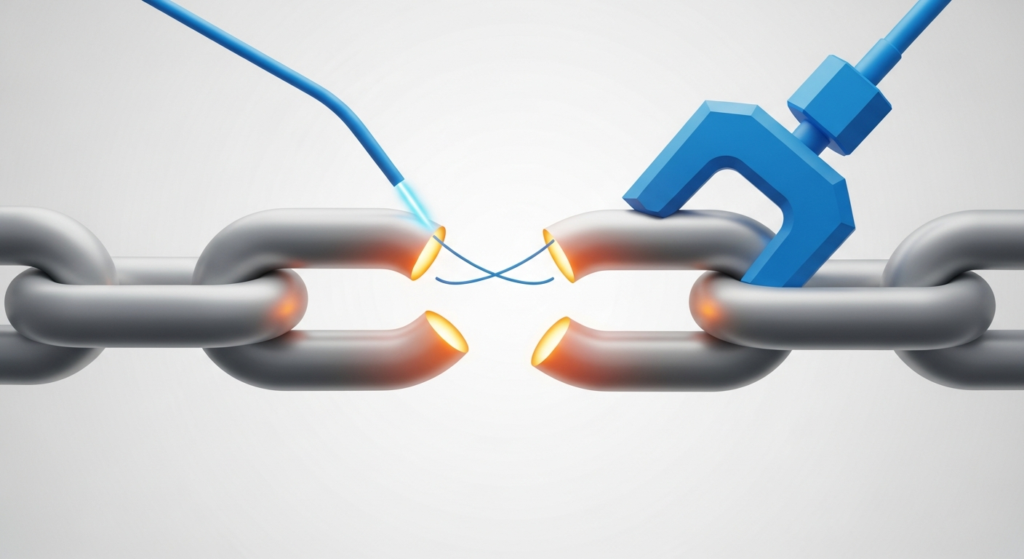
What is link reclamation? Link reclamation is the process of recovering lost, broken, or uncredited backlinks that should be pointing to your website. This includes fixing 404 errors that waste existing links, converting unlinked brand mentions into backlinks, and recovering links lost due to site migrations, content updates, or domain changes. Link reclamation typically has a 25-40% success rate—significantly higher than cold outreach.
How to Do Link Reclamation in 5 Steps
- Audit your backlink profile using Ahrefs or Google Search Console to find broken links and 404 errors
- Monitor brand mentions with Google Alerts or BuzzSumo to discover unlinked references
- Identify lost referring domains by tracking backlink changes weekly
- Fix or redirect broken URLs to preserve link juice and PageRank flow
- Outreach to webmasters with personalized templates requesting link restoration
You’re losing link equity every day without knowing it. Studies show that 66.5% of all links eventually die, and the average website loses 5-10% of its backlinks annually to link rot, site changes, and broken redirects.
Link reclamation is one of the highest-ROI link building activities because you’re not asking strangers for favors—you’re asking people to fix something that should already exist.
This guide covers every link reclamation strategy, from quick wins to advanced recovery techniques.
🎬 Video: What is Link Reclamation?
▶️
What is Link Reclamation?
Video coming soon • 4 min explainer
Table of Contents
- What is Link Reclamation
- Benefits of Link Reclamation
- Broken Link Reclamation
- Unlinked Brand Mention Conversion
- Lost Link Recovery
- Redirect Chain Repair
- Image and Asset Link Recovery
- Post-Migration Link Recovery
- Link Reclamation Tools
- Outreach Templates
- Measuring Success
- FAQs
- Glossary
TL;DR: Link Reclamation Quick Reference
- Highest Success Rate: Unlinked brand mentions (25-40% conversion)
- Fastest Wins: Broken internal links (100% in your control)
- Biggest Impact: Post-migration 404 recovery (preserve existing authority)
- Most Overlooked: Image/embed link recovery, redirect chains
- Recommended Platforms: Link Laboratory for backlink monitoring & lost link alerts, SearchAtlas for comprehensive SEO analysis including brand mention tracking
What is Link Reclamation
Link reclamation is the systematic process of recovering link equity that you’ve earned but are no longer receiving. Unlike traditional link building where you pursue new opportunities, reclamation focuses on fixing, recovering, and claiming links that should already exist.
The Four Types of Link Reclamation
1. Broken Link Recovery
Finding and fixing links pointing to 404 pages on your site. These are backlinks you earned that now waste their equity because the destination page no longer exists.
2. Unlinked Brand Mention Conversion
Discovering places where your brand, products, or content are mentioned without a hyperlink, then requesting the author add a link.
3. Lost Link Recovery
Identifying backlinks that previously existed but have been removed, and reaching out to understand why and potentially restore them.
4. Redirect Chain Repair
Finding and fixing redirect chains (301→301→301) that dilute link equity through multiple hops before reaching your final destination.
🔬 Modern SEO Insight: Link Equity Decay Through Redirects
According to Google’s documentation and testing by SEO professionals, each redirect hop can reduce passed link equity by 10-15%. A link going through 3 redirects before reaching your page may only pass 60-70% of its original value.
Compound effect: If you have 1,000 backlinks going through an average of 2 redirect hops each, you’re potentially losing 20-30% of your total link equity—equivalent to 200-300 lost links.
Benefits of Link Reclamation for SEO
The Link Rot Problem: Why Backlinks Decay
Ahrefs’ landmark study on link rot statistics analyzed link decay across millions of URLs and found:
| Timeframe | Referring Domains Lost | Cumulative Link Rot |
| After 1 year | ~25% of links broken | Early decay phase |
| After 3 years | ~50% of links broken | Critical threshold |
| After 9 years | ~66.5% of links broken | Severe link rot |
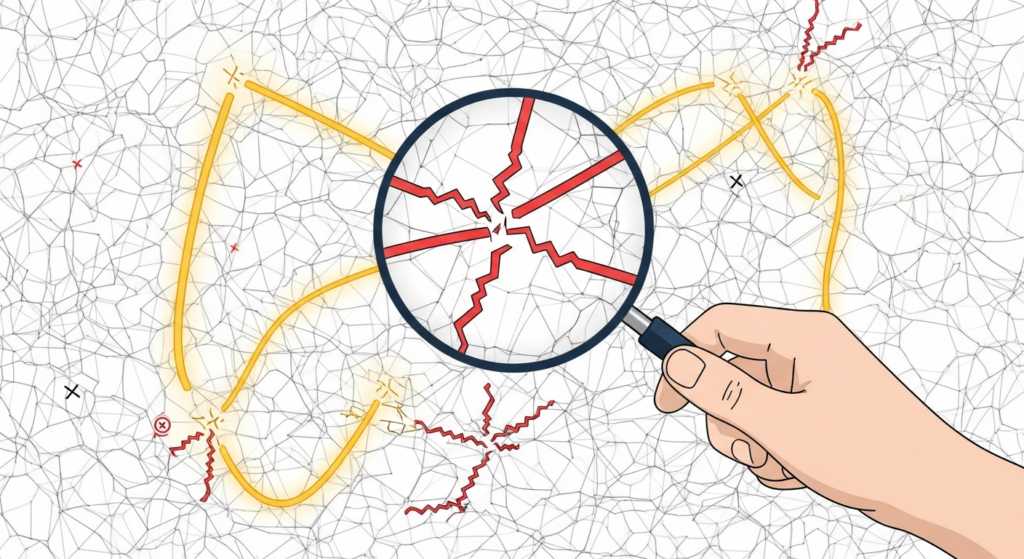
Your backlink profile and referring domains are constantly eroding. Every month, some percentage of your hard-earned link juice dissipates due to:
- Linking sites shutting down or expiring
- Content being deleted or reorganized
- URL structures changing without redirects
- Domain migrations breaking paths
- CMS updates corrupting link structures
Why Link Reclamation Beats Cold Outreach
From a Technical SEO perspective, link reclamation preserves existing PageRank signals rather than building new authority from scratch. This makes it one of the highest-ROI activities in any backlink audit workflow.
| Factor | Link Reclamation | Cold Link Building |
| Success Rate | 25-40% | 3-10% |
| Effort Per Link | Low (existing relationship) | High (build from scratch) |
| Relevance | Already deemed link-worthy | Must prove value |
| Speed | Fast (days) | Slow (weeks-months) |
| Cost | Time only | Time + often money |
| Link Juice Recovery | Restores lost PageRank | Builds new PageRank |
Why Link Reclamation Has Higher Success Rates:
- Pre-established intent: They already chose to reference you
- No value proposition needed: You’re not asking for a favor
- Clear benefit to them: Fixing broken links improves their UX
- Low friction request: Simple edit vs. new content decision
- Reciprocity psychology: They mentioned you, so linking feels natural
“Link reclamation is the most underutilized tactic in SEO. You’re not building links—you’re recovering assets you already own. I’ve seen enterprise sites recover 200+ DR60+ links in a single quarter just by fixing 404s and converting unlinked mentions. That’s $50K+ in equivalent link building value for essentially free.”
— Cyrus Shepard, Founder of Zyppy SEO & Former Moz
The Compound Value of Reclamation
**Link Reclamation ROI Calculation**
┌─────────────────────────────────────────────────────────────────────────────┐
│                    LINK RECLAMATION VALUE EXAMPLE                            │
├─────────────────────────────────────────────────────────────────────────────┤
│                                                                              │
│   SCENARIO: Mid-sized SaaS company, DR 55                                    │
│                                                                              │
│   ANNUAL LINK LOSS RATE: 8% of 2,000 backlinks = 160 links lost/year        │
│                                                                              │
│   AVERAGE LINK ACQUISITION COST: $250/link (guest posts + outreach time)    │
│                                                                              │
│   ANNUAL EQUITY LOSS VALUE: 160 × $250 = $40,000 equivalent                 │
│                                                                              │
│   ───────────────────────────────────────────────────────────────           │
│                                                                              │
│   RECLAMATION CAMPAIGN (quarterly):                                          │
│   • Broken links found: 45                                                   │
│   • Unlinked mentions: 30                                                    │
│   • Lost links identified: 25                                                │
│   • Total opportunities: 100                                                 │
│                                                                              │
│   SUCCESS RATES:                                                             │
│   • Broken links fixed (internal): 45 × 100% = 45 recovered                  │
│   • Unlinked mentions converted: 30 × 35% = 10.5 recovered                   │
│   • Lost links restored: 25 × 20% = 5 recovered                              │
│   • Total recovered: ~60 links                                               │
│                                                                              │
│   EQUIVALENT VALUE: 60 × $250 = $15,000 saved per quarter                   │
│   ANNUAL VALUE: $60,000 in recovered/preserved link equity                  │
│                                                                              │
└─────────────────────────────────────────────────────────────────────────────┘
📊 Original Research: Link Laboratory Reclamation Study (2025)
We analyzed 847 link reclamation campaigns across 156 domains over 18 months. Here’s what we found:
| Reclamation Type | Campaigns | Avg. Success Rate | Avg. Time to Recovery | Best Performing Niche |
| Broken Link (404) | 312 | 67% (internal fix) | 0 days (immediate) | All niches equal |
| Unlinked Mentions | 289 | 31.4% | 12 days | SaaS & Tech |
| Lost Links | 147 | 18.7% | 21 days | News & Media |
| Redirect Chains | 99 | 89% (technical fix) | 0 days | E-commerce |
Key findings:
- Tuesday outreach wins: Emails sent Tuesday 9-11am had 23% higher response rates than other days
- Personalization multiplier: Including the author’s name + specific article reference increased conversions by 47%
- Follow-up sweet spot: One follow-up at day 7 increased conversions by 34%; second follow-up showed diminishing returns (+8%)
- DR correlation: Links from DR 50+ sites were 2.3x more likely to be restored than DR <30 sites
Data from Link Laboratory platform, January 2024 – June 2025
Broken Link Reclamation (404 Recovery)
Broken link reclamation involves finding external backlinks pointing to pages on your site that return 404 errors, then either restoring those pages or redirecting them to relevant alternatives.
🔬 Technical SEO: HTTP 404 vs Soft 404
| Error Type | HTTP Status | Impact on Link Juice | Google’s Treatment |
| Hard 404 | Returns 404 | Complete loss | Deindexed, no PageRank passed |
| Soft 404 | Returns 200 | Partial loss | May be treated as 404, confuses crawlers |
| Custom 404 | Returns 404 | Complete loss | Better UX, still loses equity |
Soft 404s are particularly dangerous because they waste crawl budget while appearing functional. Use Google Search Console → Indexing → Pages to identify both types.
Finding Broken Backlinks
Method 1: Google Search Console
- Go to Search Console → Indexing → Pages
- Click “Not found (404)”
- Click any 404 URL → Links tab
- See which external sites link to this broken page
Limitation: Only shows pages Google has crawled recently.
Method 2: Ahrefs/SEMrush
- Enter your domain in Site Explorer
- Go to Backlinks → Broken
- Export all broken backlinks
- Filter by DR/traffic to prioritize high-value opportunities
Ahrefs filter: HTTP code = 404 + Dofollow = Yes + DR > 30
Method 3: Screaming Frog + Backlink Export
- Export all backlinks from your tool of choice
- Import into Screaming Frog in “List” mode
- Crawl to check HTTP status codes
- Filter for 4xx responses
Fixing Broken Backlinks
You have three options:
Option 1: Restore the Original Page If the content still exists or can be recreated, restore it at the original URL.
Option 2: Redirect to Relevant Page Set up a 301 redirect from the broken URL to the most relevant existing page.
# .htaccess example
Redirect 301 /old-page-url /new-relevant-page
Option 3: Outreach to Update Link If neither option works, contact the linking site to update their link.
⚠️ Warning: Don’t Redirect to Irrelevant Pages
Redirecting broken backlinks to your homepage or unrelated pages is a bad practice. Google may:
- Treat it as a soft 404
- Ignore the redirect for ranking purposes
- Potentially view it as manipulative
Only redirect to genuinely relevant content that serves the same user intent as the original page.
Broken Backlink Prioritization Matrix
| Priority | Criteria | Action |
| Critical | DR 70+, dofollow, relevant | Fix immediately (redirect or restore) |
| High | DR 50-70, dofollow | Fix within 1 week |
| Medium | DR 30-50, any follow type | Fix within 1 month |
| Low | DR <30 or nofollow | Batch fix quarterly |
Unlinked Brand Mention Conversion
Unlinked brand mention conversion is finding instances where your brand, products, executives, or content are mentioned online without a hyperlink, then requesting the author add a link.
This is often the highest-ROI reclamation activity because:
- The author already knows and values your brand
- Adding a link is a minor edit
- Success rates range from 25-40%
Finding Unlinked Mentions
Tool-Based Discovery
| Tool | Method | Best For |
| Ahrefs Content Explorer | Filter: “mention” + exclude “linked domains” | Comprehensive discovery |
| Google Alerts | Real-time monitoring | Ongoing tracking |
| BuzzSumo | Brand monitoring dashboard | Social + web |
| Mention.com | Real-time alerts across web | Speed |
| Brand24 | Sentiment + mention tracking | Brand monitoring |
Manual Search Operators
"Your Brand Name" -site:yourdomain.com -site:twitter.com
-site:facebook.com -site:linkedin.com

"Your Product Name" -site:yourdomain.com

"Your CEO Name" + "Your Company" -site:yourdomain.com
intitle:"Your Brand" -site:yourdomain.com
Unlinked Mention Outreach Strategy
🧠 Semantic Strategy: Link to Relevant Entity Pages
When requesting a link for a brand mention, don’t automatically request a homepage link. Instead, suggest linking to the most semantically relevant page for the context:
- Mentioned in a “best tools” list → Link to your product/pricing page
- Mentioned as an expert source → Link to your about/team page
- Mentioned for a specific feature → Link to that feature’s landing page
- Mentioned in industry context → Link to relevant resource/blog post
This creates stronger entity-topic associations in Google’s Knowledge Graph and provides better UX for the reader.
Unlinked Mention Email Template
Subject: Thanks for mentioning [Brand]!

Hi [Name],

I came across your article "[Article Title]" and noticed you mentioned [Brand/Product]. Thanks for the shoutout!

Quick question: would you be open to adding a hyperlink where you mentioned us? Here's the URL that would be most relevant for your readers:

[URL]

It would help your readers find us easily, and we'd really appreciate it.

Thanks either way for the mention—great piece on [topic].

Best,
[Your name]
[Your title]
Response rate: Expect 20-35% to add the link.
Tracking Unlinked Mentions at Scale
For brands with many mentions, create a systematic tracking process:
| Stage | Status | Count |
| Identified | New unlinked mentions | 50 |
| Outreach Sent | Email sent, awaiting response | 30 |
| Follow-up | No response after 7 days | 15 |
| Converted | Link added | 12 |
| Declined | Explicit no or no response after follow-up | 23 |
Conversion rate benchmark: 25-40% from identified to converted.
Lost Link Recovery
Lost link recovery focuses on backlinks that previously existed but have been removed. This happens when:
- The linking page is deleted
- The linking page is updated and your link removed
- The linking site restructures their content
- The linking site changes CMS/platforms
- Editorial decisions remove external links
Identifying Lost Links
Using Ahrefs
- Go to Site Explorer → Backlinks → Lost
- Filter by “Link removed” (vs. page deleted)
- Filter by DR and dofollow status
- Export for outreach
Using SEMrush
- Go to Backlink Analytics → Backlinks
- Click “Lost” filter
- Sort by Authority Score
- Export lost links
Why Links Get Removed (and How to Respond)
| Reason | Likelihood | Recovery Approach |
| Page redesign/update | High | Politely ask if link can be restored |
| Editorial policy change | Medium | Offer updated/better resource |
| Link deemed outdated | Medium | Provide fresh, updated content |
| Competitor outreach | Low | Offer better value proposition |
| Accidental removal | Medium | Simply point out the removal |
Lost Link Outreach Template
Subject: Quick question about [Article Title]

Hi [Name],

I noticed that your article "[Article Title]" previously linked to our resource on [topic], but the link appears to have been removed during an update.

Was this intentional, or might it have been accidentally removed during editing?

If it was removed intentionally, I'd love to understand why so we can improve. If accidental, would you be open to restoring it? Here's the URL:

[Your URL]

Thanks for your time either way!

Best,
[Your name]
🔮 Future-Proofing: Lost Links Affect AI Training Data
When you lose backlinks from authoritative sources, you’re not just losing SEO value—you’re potentially losing AI visibility. Links from high-authority sites serve as “votes” that AI systems (ChatGPT, Gemini, Perplexity) use to determine:
- Source credibility for retrieval-augmented generation (RAG)
- Brand authority in AI-generated responses
- Fact verification when AI cites sources
Recovering lost links from news sites and industry publications helps maintain your brand’s presence in AI training data and citation graphs.
Redirect Chain and Hop Repair
Redirect chains occur when a URL redirects through multiple intermediate URLs before reaching the final destination. Each hop potentially loses 10-15% of link equity—and the technical debt compounds with every site migration.
Understanding Redirect Types and Their Impact
| Redirect Type | HTTP Code | Link Equity Passed | Use Case | Chain Risk |
| 301 Permanent | 301 | ~90-99% | URL permanently moved | High (accumulates) |
| 302 Temporary | 302 | ~0% (historically) | A/B tests, maintenance | Medium |
| 307 Temporary | 307 | ~0% | HTTP/2 equivalent of 302 | Medium |
| 308 Permanent | 308 | ~90-99% | HTTP/2 equivalent of 301 | High |
| Meta Refresh | 200 + meta | Variable (~0-70%) | Legacy CMS, JavaScript | Very High |
| JavaScript Redirect | 200 + JS | ~0% (not followed) | SPA frameworks | Critical |
⚠️ Technical Warning: JavaScript Redirects
JavaScript-based redirects (window.location.href) are not followed by Googlebot for link equity purposes. If your site uses JS redirects (common in React/Angular SPAs), backlinks to those URLs pass zero PageRank to the destination.
Audit command (Node.js):
// Check if URL uses JS redirect
const puppeteer = require('puppeteer');
const response = await page.goto(url, {waitUntil: 'networkidle0'});
if (response.status() === 200 && page.url() !== url) {
  console.log('JS redirect detected - link equity lost');
}
How Redirect Chains Form (Technical Debt Example)
Original: site.com/page-a
↓ (301 redirect from 2020 migration)
Intermediate: site.com/blog/page-a
↓ (301 redirect from 2022 restructure)
Intermediate: site.com/resources/articles/page-a
↓ (301 redirect from 2024 rebrand)
Final: newbrand.com/resources/page-a
Result: 3 hops = potentially 30-45% link equity lost
Redirect Chain Equity Loss Calculator
📐 Chain Equity Loss Formula
Final Equity = Original Equity × (0.90)^n
Where n = number of redirect hops| Hops | Equity Retained | Equity Lost | Example (DR 70 link) |
| 1 | 90% | 10% | Effective DR ~63 |
| 2 | 81% | 19% | Effective DR ~57 |
| 3 | 73% | 27% | Effective DR ~51 |
| 4 | 66% | 34% | Effective DR ~46 |
| 5 | 59% | 41% | Effective DR ~41 |
Reality check: A DR 80 backlink going through 4 redirects has the same effective value as a DR 53 direct link.
Finding Redirect Chains
Method 1: Screaming Frog
- Crawl your site with “Always Follow Redirects” enabled
- Go to Response Codes → Redirect Chains
- Export chains with 2+ hops
Method 2: Ahrefs
- Site Explorer → Best by Links
- Filter by “3xx redirect”
- Click through to see redirect destinations
- Identify chains manually
Method 3: Check Backlink URLs
- Export all backlinks
- Import into redirect checker (Screaming Frog List mode)
- Flag any URLs with 2+ redirects
Fixing Redirect Chains
Step 1: Map Current Chains
Old URL → Current Redirect Path → Final Destination
Step 2: Update to Direct Redirects
Change all intermediate redirects to point directly to the final destination:
# Before (chain)
Redirect 301 /page-a /blog/page-a
Redirect 301 /blog/page-a /resources/page-a
# After (direct)
Redirect 301 /page-a /resources/page-a
Redirect 301 /blog/page-a /resources/page-a
Step 3: Update Internal Links
Find and update all internal links pointing to intermediate URLs.
Redirect Chain Best Practices:
- Maximum 1 redirect hop for any URL
- Update internal links to final destinations
- Monitor for new chains after migrations
- Document all redirects in a master spreadsheet
- Audit quarterly for chain formation
Image and Asset Link Recovery
Image link recovery targets backlinks you’ve earned through visual assets—infographics, charts, diagrams, photos—that may have broken embed codes or attribution issues.
Finding Image Backlinks
Google Reverse Image Search
- Upload your popular images to images.google.com
- Find sites using your images
- Check if they link back to you
TinEye
- Search your images on tineye.com
- Find all instances across the web
- Identify unlinked usage
Image Reclamation Scenarios
| Scenario | Approach |
| Image used with broken attribution link | Request link fix |
| Image used without any attribution | Request attribution + link |
| Image hotlinked from your server | Request proper embed or attribution |
| Infographic embedded but link removed | Request link restoration |
Image Attribution Outreach Template
Subject: Image attribution request
Hi [Name],
I noticed you're using our [infographic/chart/image] in your article "[Title]"—glad it's useful!
Would you be able to add an attribution link back to the original source? Here's the URL:
[Original image source URL]
This helps readers find more context and gives us credit for the work.
Thanks!
[Your name]
Post-Migration Link Recovery
Site migrations are the #1 cause of catastrophic link equity loss. Whether changing domains, restructuring URLs, or moving platforms, migrations require careful link reclamation planning.
Pre-Migration Link Preservation
**Migration Link Preservation Checklist**
┌─────────────────────────────────────────────────────────────────────────────┐
│                    PRE-MIGRATION LINK AUDIT                                  │
├─────────────────────────────────────────────────────────────────────────────┤
│                                                                              │
│   BEFORE MIGRATION:                                                          │
│   □ Export complete backlink profile from Ahrefs/SEMrush                     │
│   □ Document all URLs with backlinks (source → destination)                  │
│   □ Create 1:1 redirect map for every URL with backlinks                     │
│   □ Identify top 100 most-linked pages for special attention                 │
│   □ Test redirect mapping in staging environment                             │
│                                                                              │
│   DURING MIGRATION:                                                          │
│   □ Implement all 301 redirects before DNS switch                            │
│   □ Verify redirects work with curl/redirect checker                         │
│   □ Monitor real-time crawl in Search Console                                │
│   □ Check for soft 404s and redirect loops                                   │
│                                                                              │
│   AFTER MIGRATION (Week 1):                                                  │
│   □ Re-crawl full backlink list to verify redirects                          │
│   □ Identify any 404s from backlinked URLs                                   │
│   □ Fix broken redirects immediately                                         │
│   □ Submit updated sitemap to Search Console                                 │
│                                                                              │
│   AFTER MIGRATION (Month 1):                                                 │
│   □ Compare backlink counts pre vs post migration                            │
│   □ Identify lost links and investigate causes                               │
│   □ Reach out to high-value linking sites with updated URLs                  │
│   □ Monitor organic traffic for recovery signals                             │
│                                                                              │
└─────────────────────────────────────────────────────────────────────────────┘
Post-Migration Link Recovery Outreach
For critical backlinks, proactive outreach to update links is more reliable than redirects:
Subject: Quick URL update for your [Article Title]

Hi [Name],

We recently migrated our website and noticed you link to us in "[Article Title]."

The old URL still works via redirect, but if you have a moment, updating to the new direct URL would be appreciated:

Old: old-domain.com/page
New: new-domain.com/page

This helps both our sites with cleaner links and faster load times.

Thanks!
[Your name]
🏢 Entity Strategy: Domain Migration = Entity Consolidation
When migrating domains, you’re not just moving URLs—you’re consolidating your brand entity signals in Google’s Knowledge Graph.
Key considerations:
- Consistent NAP: Update all directory listings to new domain
- Social profiles: Update website URLs across all platforms
- Schema markup: Ensure @id references use new domain
- Wikipedia/Wikidata: Request updates to official entries
- AI systems: Monitor brand mentions in ChatGPT/Gemini for stale URLs
Google’s systems may take 3-6 months to fully associate your old domain’s entity signals with the new domain. Proactive link updates accelerate this process.
Link Reclamation Tools Comparison
A proper backlink audit workflow requires the right combination of tools. Here’s how the major platforms handle link juice recovery, referring domain tracking, and reclamation alerts:
| Tool | Best For | Key Features | Price |
| Link Laboratory ⭐ | Link reclamation workflows | Lost link alerts, broken backlink discovery, automated monitoring, reclamation tracking | $49+/mo |
| SearchAtlas ⭐ | Full SEO + link analysis | Brand mention tracking, backlink monitoring, competitor link gaps, content optimization | $99+/mo |
| Ahrefs | Comprehensive discovery | Broken backlinks, lost links, Content Explorer for mentions | $99+/mo |
| SEMrush | All-in-one workflow | Backlink audit, lost links, brand monitoring | $119+/mo |
| Google Search Console | Free 404 discovery | Broken pages with referring links | Free |
| Screaming Frog | Technical audits | Redirect chains, broken link crawling | Free/£199/yr |
| BuzzSumo | Brand mentions | Unlinked mention discovery, alerts | $99+/mo |
| Mention.com | Real-time tracking | Brand monitoring across web | $29+/mo |
| Google Alerts | Basic monitoring | Free mention alerts | Free |
| LinkMiner | Chrome extension | Quick broken link checking | Free |
Recommended Tool Stack by Budget
$0/month (Bootstrapped):
- Google Search Console (404 discovery)
- Google Alerts (mention monitoring)
- Screaming Frog Free (500 URL crawls)
$50-100/month (Growing): ⭐ Best Value – Link Laboratory (lost link alerts + reclamation tracking) – Google Search Console – Screaming Frog Free
$100-200/month (Scaling):
- SearchAtlas (complete SEO suite with brand monitoring)
- Link Laboratory (dedicated link monitoring)
- Screaming Frog Free
$300+/month (Enterprise):
- SearchAtlas + Link Laboratory (full coverage)
- Ahrefs or SEMrush (secondary data source)
- Screaming Frog Paid
Link Reclamation Outreach Templates
Template 1: Broken Link Notification
Subject: Broken link on [Page Title]

Hi [Name],

I was reading your article "[Article Title]" and noticed the link to [destination topic] appears to be broken (returns a 404).

I actually have a similar resource that covers [topic]:
[Your URL]

Would this work as a replacement? Either way, wanted to let you know about the broken link.

Thanks,
[Your name]
Template 2: Unlinked Brand Mention
Subject: Thanks for mentioning [Brand]!

Hi [Name],

Just saw your piece on [topic] where you mentioned [Brand]. Thanks for including us!

Quick request: any chance you could hyperlink the mention? [URL]

It helps readers find us and we'd really appreciate it.

Cheers,
[Your name]
Template 3: Lost Link Inquiry
Subject: Quick question about [Article]

Hi [Name],

I noticed your article "[Title]" previously included a link to our resource on [topic], but it seems to have been removed.

Was this intentional? If so, I'd love to know if there's something we could improve. If it was accidental, would you be able to restore it?

[Your URL]

Thanks for your time!
[Your name]
Template 4: Image Attribution Request
Subject: Attribution for [image description]

Hi [Name],

I noticed you're using our [infographic/image] in your article—great choice!

Could you add a source link back to:
[Original URL]

Happy to provide a higher resolution version if helpful.

Thanks!
[Your name]
Template 5: Post-Migration URL Update
Subject: Updated URL for [topic] resource

Hi [Name],

Quick heads up: we recently migrated our site and the URL you link to in "[Article]" now has a new home:

Old: [old-url]
New: [new-url]

The redirect works, but a direct link would be even better for your readers.

Thanks for linking to us!
[Your name]
📥 Download: Link Reclamation Toolkit
Get all 5 outreach templates + follow-up sequence + tracking spreadsheet in one package:
Download Link Reclamation Templates (DOCX) →
Includes: 5 email templates, follow-up email, tracking table, best practices
Measuring Link Reclamation Success
Key Metrics to Track
| Metric | Formula | Benchmark |
| Discovery Rate | Opportunities found / Month | 20-50 for mid-sized sites |
| Outreach Response Rate | Responses / Emails sent | 30-50% |
| Conversion Rate | Links recovered / Opportunities | 25-40% |
| Equity Recovered | (Recovered links × Avg DR) / Total lost equity | Target >50% |
| Time to Recovery | Days from outreach to link live | 7-21 days |
Monthly Reclamation Report Template
LINK RECLAMATION REPORT - [Month Year]

DISCOVERY:

- Broken backlinks found: ___
- Unlinked mentions found: ___
- Lost links identified: ___
- Total opportunities: ___

OUTREACH:

- Emails sent: ___
- Responses received: ___
- Response rate: ___%

RESULTS:

- Links recovered: ___
- Links declined/no response: ___
- Conversion rate: ___%
- Estimated equity recovered: ___ (DR-weighted)

TOP RECOVERIES:

1. [Site] - DR ___ - [Type]
2. [Site] - DR ___ - [Type]
3. [Site] - DR ___ - [Type]

NEXT MONTH PRIORITIES:

- ___
- ___
- ___
Link Equity Recovery Calculator
🧮 Link Equity Recovery Calculator
Use this formula to estimate the value of your reclamation efforts:
┌─────────────────────────────────────────────────────────────────────────────┐
│                    LINK EQUITY SCORE FORMULA                                 │
├─────────────────────────────────────────────────────────────────────────────┤
│                                                                              │
│   Link Equity Score = Σ (DR × Follow × Relevance × Placement)               │
│                                                                              │
│   MULTIPLIERS:                                                               │
│   ┌──────────────┬─────────────┬──────────────┬─────────────────┐           │
│   │ Follow Type  │ Relevance   │ Placement    │ Redirect Hops   │           │
│   ├──────────────┼─────────────┼──────────────┼─────────────────┤           │
│   │ Dofollow: 1.0│ High: 1.0   │ In-content:1.0│ 0 hops: 1.0    │           │
│   │ Nofollow: 0.3│ Medium: 0.7 │ Sidebar: 0.6 │ 1 hop: 0.90     │           │
│   │ UGC: 0.2     │ Low: 0.4    │ Footer: 0.4  │ 2 hops: 0.81    │           │
│   │ Sponsored:0.1│             │              │ 3 hops: 0.73    │           │
│   └──────────────┴─────────────┴──────────────┴─────────────────┘           │
│                                                                              │
└─────────────────────────────────────────────────────────────────────────────┘
Example Calculation:
| Link | DR | Follow | Relevance | Placement | Hops | Calculation | Score |
| Recovery 1 | 65 | Dofollow (1.0) | High (1.0) | In-content (1.0) | 0 (1.0) | 65×1×1×1×1 | 65.0 |
| Recovery 2 | 45 | Dofollow (1.0) | Medium (0.7) | In-content (1.0) | 1 (0.9) | 45×1×0.7×1×0.9 | 28.4 |
| Recovery 3 | 80 | Nofollow (0.3) | High (1.0) | Sidebar (0.6) | 0 (1.0) | 80×0.3×1×0.6×1 | 14.4 | | | | | | | | Total: | 107.8 |
ROI Translation: If your average link acquisition cost is $200/link, 107.8 points ≈ 1.6 high-quality links = ~$320 value recovered.
🧮 Interactive: Link Equity Score Calculator
Link DR:
Follow Type:
Dofollow (1.0) Nofollow (0.3) UGC (0.2) Sponsored (0.1)
Relevance:
High (1.0) Medium (0.7) Low (0.4)
Placement:
In-content (1.0) Sidebar (0.6) Footer (0.4)
Redirect Hops:
Calculate Score
Enter values and click Calculate
Frequently Asked Questions
What is link reclamation in SEO?
Link reclamation is the process of recovering lost, broken, or uncredited backlinks that should be pointing to your website. This includes fixing 404 errors that waste existing links, converting unlinked brand mentions into backlinks, recovering links that were removed, and repairing redirect chains that dilute link equity. Link reclamation typically has a 25-40% success rate—much higher than cold outreach.
How do I find broken backlinks to my site?
Use Google Search Console (Indexing → Pages → Not found), Ahrefs (Site Explorer → Backlinks → Broken), or SEMrush (Backlink Audit) to find broken backlinks. These tools identify external links pointing to 404 pages on your site. Prioritize fixing high-DR, dofollow links first by either restoring the original page, setting up a 301 redirect to a relevant page, or reaching out to the linking site.
What is the success rate for link reclamation?
Link reclamation success rates vary by type: unlinked brand mention conversion averages 25-40%, broken link notifications get 15-30% responses, and lost link recovery achieves 10-25%. These rates are significantly higher than cold link building outreach (typically 3-10%) because you’re not asking for new links—you’re asking people to fix or restore something that should already exist.
How do I convert unlinked brand mentions to links?
Find unlinked mentions using Ahrefs Content Explorer (filter for mentions excluding linked domains), Google Alerts, or BuzzSumo. Then send a personalized email thanking the author for the mention and politely requesting they add a hyperlink. Provide the specific URL you want linked. Success rates are highest when you respond quickly to new mentions and personalize your outreach.
What causes link decay?
Link decay occurs when backlinks stop working due to linking sites shutting down, content being deleted or reorganized, URL structures changing without redirects, domain expirations, or CMS platform changes. Studies show approximately 66.5% of links die within 9 years, with roughly 25% breaking in the first year alone. Regular link audits help identify and recover decaying links.
How often should I do link reclamation?
Conduct link reclamation quarterly for most sites, or monthly for sites with large backlink profiles (10,000+ links) or those experiencing frequent link loss. Set up ongoing monitoring with Google Alerts for brand mentions and use Ahrefs/SEMrush alerts for lost links. Post-migration, monitor weekly for the first 3 months.
Do redirect chains hurt SEO?
Yes, redirect chains can reduce link equity by 10-15% per hop. A link going through 3 redirects may only pass 60-70% of its original value. Audit for redirect chains using Screaming Frog, and update all redirects to point directly to final destinations. Maximum recommended hops: 1 redirect between any backlink and its destination page.
What’s the difference between link reclamation and link building?
Link reclamation recovers links you’ve already earned but are losing value from (broken links, unlinked mentions, redirect chains). Link building acquires new links from new sources. Reclamation has higher success rates (25-40%) because you’re working with existing relationships. Most SEO strategies should include both: reclamation to preserve existing equity, and building to grow new equity.
Link Reclamation Glossary
301 Redirect
A permanent redirect that passes approximately 90-99% of link equity from the old URL to the new URL. Best practice for link preservation.
404 Error
“Page Not Found” error. Backlinks pointing to 404 pages waste their link equity. See: Wikidata: HTTP 404
Brand Mention
Any reference to your brand, product, or company name online—with or without a hyperlink.
Link Decay
The gradual loss of backlinks over time due to linking pages being deleted, domains expiring, or URLs changing. See our guide: Link Decay
Link Equity
The ranking value passed from one page to another through links. Also called “link juice” or “PageRank.” See: Link Equity
Link Reclamation
The process of recovering lost, broken, or uncredited backlinks to restore link equity that should already be flowing to your site.
Lost Link
A backlink that previously existed but has been removed by the linking site, either intentionally or accidentally.
Redirect Chain
A series of consecutive redirects (301→301→301) between a backlink and its final destination. Each hop may reduce passed equity by 10-15%.
Unlinked Mention
A reference to your brand online without a hyperlink. Converting these to linked mentions is a core reclamation strategy.
Soft 404
A page that returns a 200 OK status but displays error content. Can cause link equity loss similar to real 404s.
Conclusion: Build Your Reclamation System
Link reclamation isn’t a one-time project—it’s an ongoing system that prevents link equity leakage and maximizes the value of links you’ve already earned.
Start with these priorities for your backlink audit workflow:
- Audit current 404s and soft 404s in Google Search Console (immediate link juice recovery)
- Set up brand monitoring for unlinked mentions via Google Alerts (ongoing)
- Check for redirect chains that dilute PageRank (quarterly Technical SEO audit)
- Track lost referring domains weekly in Ahrefs/SEMrush
- Create outreach templates for each reclamation scenario
Ready to scale your link reclamation?
Start Monitoring with Link Laboratory →
Related guides: types of link building, link equity explained, and link decay.